
How to Search Tarrant County Traffic Court Records
There is no single box that searches every traffic ticket in the county. You search the court that filed your citation. Justice of the Peace courts hold tickets written by Texas DPS, the Tarrant County Sheriff, Texas Parks and Wildlife, and other state and county agencies. City police tickets go to that city's municipal court. So a Fort Worth police ticket and a DPS ticket on the same highway can end up in two different systems. Find your court name on the printed citation before you start.
Have a few things ready. The citation number is best. A full name plus a date of birth or a driver license number works too. Know the answer date printed on the ticket, since that deadline drives your options. If you are not sure which Justice court holds a county or state ticket, the county lists all eight precinct courts on its Justice of the Peace courts page.
- Read the citation for the court name, precinct or city, and answer date.
- Open that court's online search or payment tool, or call the clerk listed for it.
- Enter the citation number, or search by your name and driver license number.
- Open the case and check the charge, the answer date, and the disposition.
- Pay, request a driving safety course, or set the case for a hearing before the deadline.
One warning matters more than the rest. Call the court before you pay a ticket online if you want to keep it off your driving record. Paying often counts as a guilty plea, which becomes a conviction that gets reported. Many people lose a chance at a driving safety course just by clicking pay too soon.
Which Courts Handle Traffic Cases in Tarrant County
Three court levels handle traffic matters in the county. Justice of the Peace courts take Class C misdemeanor citations filed by state and county agencies. The JP6 court explains that justice courts have jurisdiction over Class C cases brought by Texas DPS, the Sheriff, Texas Parks and Wildlife, and other agencies. Municipal courts handle city police tickets in places like Fort Worth, Arlington, Hurst, Southlake, and Mansfield. Serious driving crimes are a different animal.
When a charge is more than a fine-only offense, it leaves traffic court. DWI, intoxication assault, intoxication manslaughter, evading, racing that causes injury, and driving while license invalid with enhancements can route to county criminal or district criminal courts. Those are handled by the Tarrant County District Clerk or the County Clerk, not a JP or city court. The broad split looks like this.
| Court | Traffic Cases Handled | Records Held By |
|---|---|---|
| Justice of the Peace | Class C citations from DPS, Sheriff, Parks and Wildlife, other agencies | The JP precinct court |
| Municipal court | City police tickets within that city's limits | The city municipal court |
| County or district criminal | DWI and other serious driving crimes | County Clerk or District Clerk |
Note: A citation written by a city officer almost always goes to that city's municipal court, so check the city name on the ticket before you search a county portal.
Types of Traffic Cases on Record
Traffic records cover far more than speeding. They range from minor fix-it tickets to fine-only criminal charges. The bulk of them are Class C misdemeanors, which carry a fine but no jail time. The charge text on the record tells you the offense, and the statute or ordinance tells you the law it falls under. Here are the main types you will see filed in a JP or municipal court.
- Moving violations - speeding, running a light, failure to yield, and similar offenses that may carry driving-record points.
- Non-moving and equipment - expired registration, defective lights, or other vehicle-condition issues.
- Insurance and registration - no insurance, failure to maintain financial responsibility, or driving an unregistered vehicle.
- Commercial vehicle - violations tied to commercial trucks and CDL drivers, which carry stricter rules.
- Compliance-fixable - tickets a court may dismiss once you show proof of insurance, a license, or a repair.
Some offenses look small but are not fine-only. Driving while license invalid, repeat insurance failures with enhancements, and crash-related charges can climb above Class C. Those move out of traffic court and into the criminal system, where the record sits with a different clerk.
What Tarrant County Traffic Court Records Show
A traffic case file holds more than the ticket. It tracks the charge, the plea, the deadlines, the money, and the final outcome. Public displays usually redact sensitive items, so a driver license number or a date of birth may be hidden from public view even though the court collected it. The table below lists the core fields a typical JP or municipal traffic record carries.
| Field | What It Shows |
|---|---|
| Citation Number | The printed ticket number, sometimes called the complaint number |
| Offense | Charge text such as speeding, no insurance, or expired registration |
| Statute / Ordinance | The Texas Transportation Code section or city ordinance cited |
| Plea | Guilty, no contest, or not guilty |
| Court Setting | Pretrial, bench trial, jury trial, show cause, or compliance review |
| Fine and Costs | Base fine plus court costs and any reimbursement or time-payment fees |
| Disposition | Paid, dismissed, driving safety course, deferred, conviction, or not guilty |
| DPS Reporting | Whether the outcome was reported to the state as a conviction |
| Warrant / FTA | Failure-to-appear warrant, capias pro fine, or a state hold where it applies |
The issuing agency and officer may also appear, along with the violation date and time, the filing date, and any compliance documents like an insurance card or a course certificate. Reading the disposition line is what tells you how the case actually ended.
Searching by Citation Number vs by Name
You can usually search a traffic record two ways. The citation number is the cleanest path. It points straight to one case with no guessing. A name search casts a wider net, which helps when you lost the ticket, but it can return several people with the same name. Adding a driver license number or a date of birth narrows a name search fast. The court and precinct fields help when you know which JP place or city court filed the case.
| Search Field | Type | Required | Notes / Format |
|---|---|---|---|
| Citation Number | Text | No | Printed ticket or complaint number; best single search key |
| Defendant Name | Text | No | Full legal name; may return multiple matches |
| Driver License Number | Text | No | Narrows a name search to one person |
| Court / Precinct | Dropdown | No | JP precinct or place, or the city municipal court |
Watch the citation number format. A leading zero or a stray space can return nothing. If a number search fails, try the name with a date range around the offense date instead.
Paying or Contesting a Tarrant County Traffic Ticket
You have a few ways to answer a ticket. You can pay it, ask for a driving safety course, ask for deferred disposition, or plead not guilty and set a hearing. Most courts take payment online, by mail, by phone, or in person. The deadline is the answer date on the citation. Miss it and the court can issue a warrant or a capias pro fine and add a state hold on your license renewal.
Your plea shapes the outcome. A guilty or no-contest plea with a straight payment usually creates a conviction that gets reported to the state. A not-guilty plea sends the case toward a bench trial or jury trial, and many people hire an attorney for that. If you cannot pay the full amount, ask the court about a payment plan or other options before the deadline.
The steps below follow the path the JP6 court lays out for answering a ticket.
- Read the citation for the court, precinct or city, answer date, and charge.
- Search or contact the court. Do not pay first if you want a driving safety course or deferred disposition.
- Choose your plea: guilty, no contest, or not guilty.
- For a driving safety course, request it before the deadline, pay the required court costs and administrative fee, finish an approved course, and submit your certificate and a state driving record if the court asks.
- For a not-guilty plea, request a trial or hearing and consider an attorney.
- If you cannot pay, ask for a payment plan or other relief.
- Do not miss the deadline. A missed answer date can bring a warrant or capias and license consequences.
Important: Call the court before you pay online if you want to keep a citation off your driving record, because paying can count as a guilty plea and create a conviction.
Public Access Laws for Traffic Court Records
Texas opens most government records under the Public Information Act, but court files follow their own track. Government Code Section 552.0035 puts judiciary records under rules set by the Supreme Court of Texas, not the standard agency request process. So you ask the clerk or the court for a traffic case file, not a county records officer. Some details inside a traffic record stay private even when the case is public.
Driver license and motor vehicle data is the big one. State law treats that information as confidential in many settings, which is why portals redact a driver license number from public view. The statutes below frame how traffic records open up and where they lock down.
Key Statutes:
Texas Government Code § 552.0035 - puts judiciary records, including court traffic files, under Supreme Court rules instead of the normal request process.
Texas Government Code § 552.130 - makes motor vehicle and driver license information confidential in many contexts, which affects traffic records.
Court Traffic Records vs State Driver Records
This is the part people miss. The court traffic record and the state driver record are two different files kept by two different offices. The court file lives with the JP, municipal, or criminal court that handled your case. It shows the citation, the charge, the plea, the hearings, the fine and court costs, any driving safety course or deferred status, any warrant, and the final disposition. The state driver record is kept by the Texas Department of Public Safety. It shows your license status, the convictions agencies reported, crashes, and suspensions.
The two files update at different times. The court record changes first, at the court level, when your case resolves. The DPS driver record only changes after the court reports the final conviction or correction. The Texas.gov driver record service explains the record types you can order, such as a three-year history or a certified abstract. You can see the full list on the Texas.gov driver-record types page.
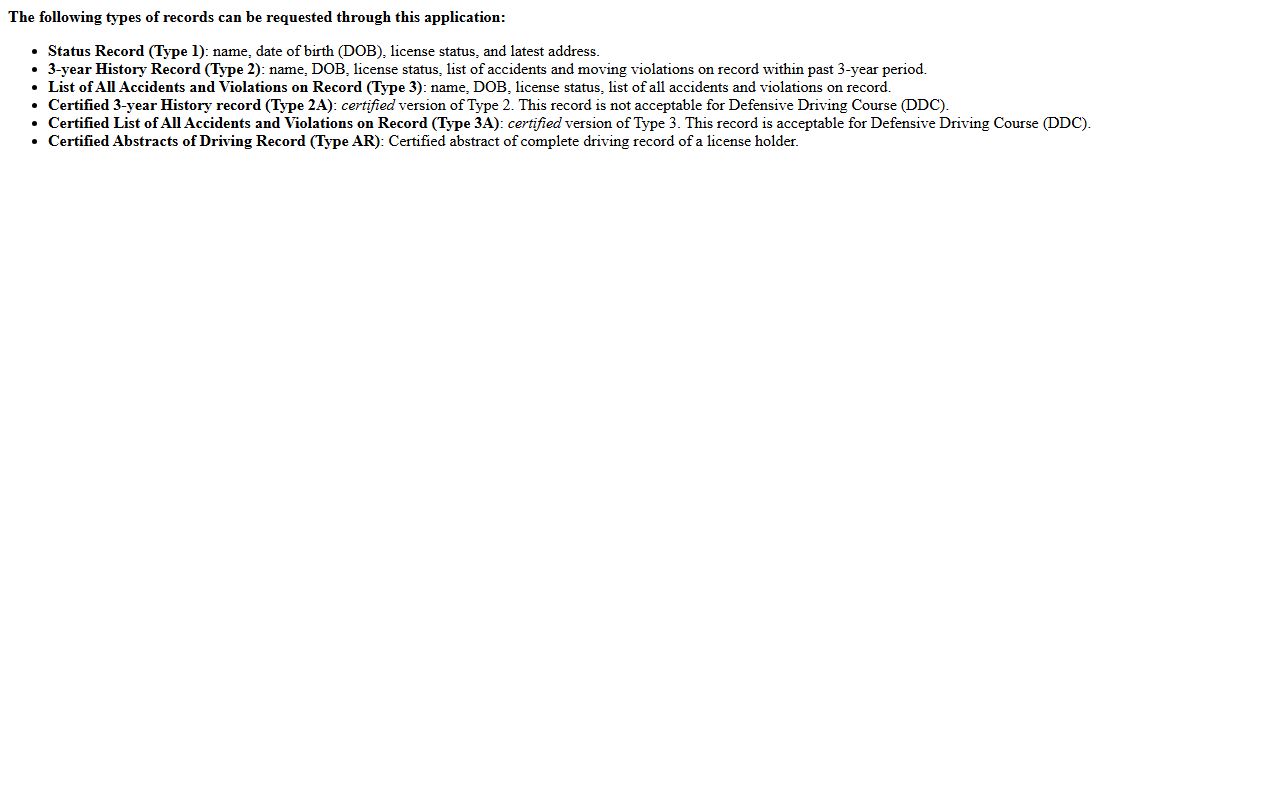
That page makes the point clear: the state file is a separate product you buy from DPS, not something the county clerk hands you with the case docket.
Fixing an error follows the file. If your driver record shows a wrong conviction, you do not start with DPS. The DPS driver-record FAQ says to contact the court that filed the original report, and after DPS gets the official correction notice you should allow 21 business days for the update. The DPS driver-record FAQ walks through how the issuing and correction process works.
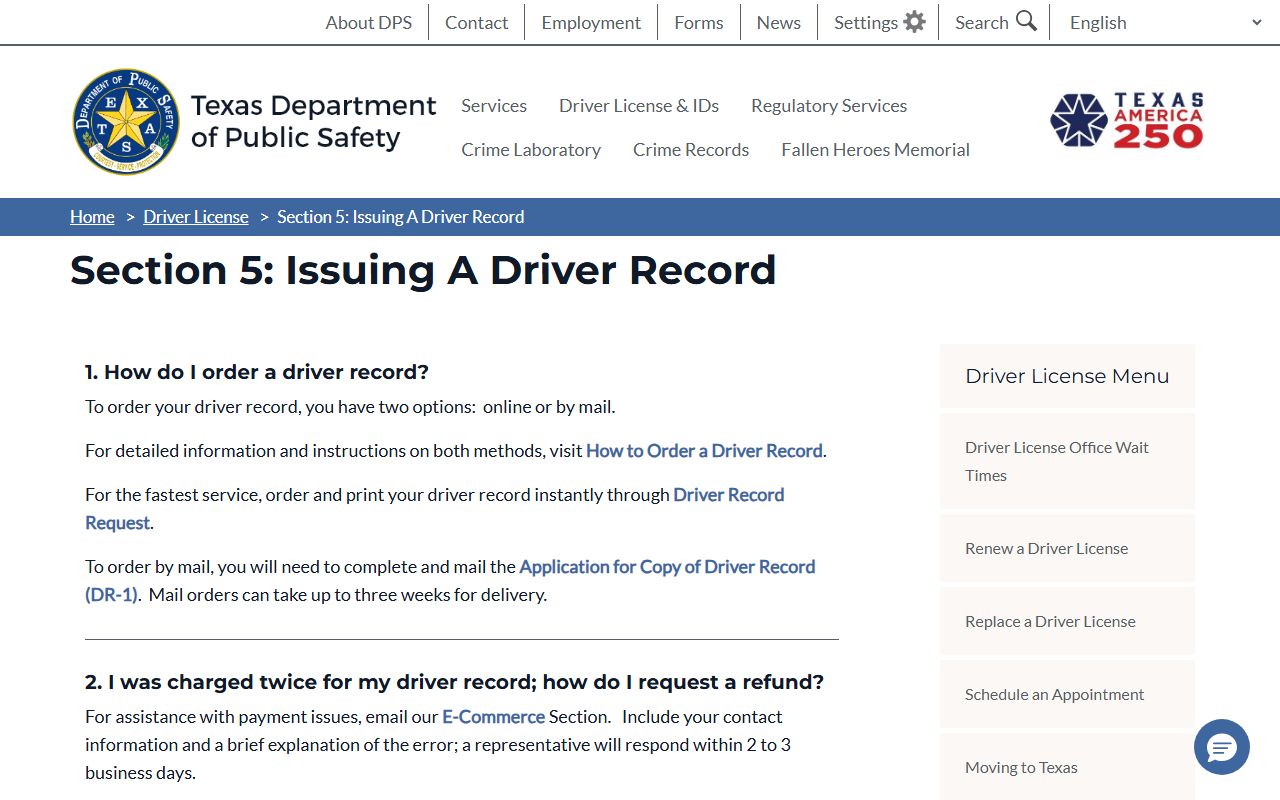
Reading that FAQ before you call saves a trip, since the court must report the change before the state file ever updates. The comparison below sums up the split.
| Point | Court Traffic Record | State Driver Record |
|---|---|---|
| Record source | JP, municipal, or criminal court | Texas Department of Public Safety |
| What is in it | Citation, charge, plea, fine, hearings, disposition | License status, reported convictions, crashes, suspensions |
| Where to access | The court's portal or clerk's office | The Texas.gov driver record service |
| How to correct errors | Ask the court that handled the case | Court reports the fix; allow 21 business days after DPS gets notice |
CDL and Commercial Driver Records
Commercial driver license holders play by stricter rules. Federal and state law limit the options a CDL driver has on a traffic ticket. Many courts will not grant a driving safety course or deferred disposition to a CDL holder, even for a minor moving violation, because the conviction must be reported. A CDL driver should never assume the dismissal paths open to other drivers apply to them.
The reporting reach is wider too. A Texas conviction can flow through interstate systems and affect a license issued in another state. Out-of-state drivers who pick up a Tarrant County ticket should expect the result to follow them home. When the stakes are a commercial license, calling the court and reading the rules first is worth the time.
DUI / DWI Cases
A DWI is not a traffic ticket. It is a criminal charge, so it does not stay in a JP or municipal traffic court. DWI cases route into the county or district criminal courts, where the record sits with a different clerk and carries far heavier consequences than a fine. The driving safety course and deferred options on this page do not apply.
For full Tarrant County DUI/DWI case information, see Tarrant County criminal records.
Deferred Adjudication and Defensive Driving Course
A driving safety course is the most common way to keep a ticket off your record, but it is not automatic. The JP6 court says you generally must be charged with a moving violation, request the course by the answer date, sign an affidavit entering a plea of guilty or no contest, pay the costs, finish an approved course, and submit proof by the deadline. The JP6 schedule lists a $10 administrative fee plus $134 in court costs, for $144 total. A court can deny the course for things like a CDL restriction, excessive speed, a construction-zone offense with workers present, passing a school bus, or leaving a crash scene.
Deferred disposition is a different deal. It usually needs a plea, a payment, and a probation-like compliance period. Finish it clean and the case may be dismissed. Fall short and the court can enter a judgment and report the conviction. The JP6 court also accepts a written request and plea by email at jp6clerk@tarrantcountytx.gov. The fee breakdown for the driving safety course looks like this.
| Item | Amount |
|---|---|
| Driver Safety Course administrative fee | $10 |
| Court costs | $134 |
| Total to request the course | $144 |
One reminder bears repeating. Do not pay the ticket outright if you want the course, and call the court before any online payment to confirm you stay eligible.
Sealing or Expunging Traffic Records
Most fine-only traffic convictions are not the target of Texas expunction law, which centers on criminal records. A dismissed citation, a case that ended in a not-guilty verdict, or certain charges that never led to a conviction may qualify for relief under the criminal procedure rules. When a charge crossed into criminal court, such as a DWI, the sealing and expunction paths follow those records instead of the traffic docket.
Eligibility is narrow and the process runs through the court. If you think a traffic-related criminal record might qualify, the expunction and nondisclosure rules sit alongside the broader criminal-record process. The Tarrant County court records page covers how sealing and expunction work across case types, and how police and certain agencies may keep access even after a record is hidden from the public.
Fees for Traffic Record Copies
Looking at a record onsite is usually free. Copies and certified documents cost money, and a state driver record is a separate paid product. The court that holds your ticket sets its copy charges, so a JP court and a city municipal court may not match exactly. The District Clerk, which holds the criminal files that DWI cases land in, posts standard per-page copy rates. The common charges look like this.
| Item | Amount |
|---|---|
| Driver Safety Course request (admin fee plus court costs) | $144 |
| Non-certified copy, per page (District Clerk) | $1 |
| Certified copy, per page (District Clerk) | $1 |
| Clerk-performed records search (District Clerk) | $5 |
Note: Confirm copy and search fees with the JP or municipal court that holds your citation, since each court sets its own charges and a state driver record is bought separately from DPS.