
Arrest Records in Tarrant County
An arrest record is the first official note that someone was taken into custody. In Tarrant County, the Sheriff's Office creates it. Sheriff Bill E. Waybourn runs the office and the Detention Bureau that books each person. When police make an arrest, they bring the person to county intake. The Corrections Center receives them, takes a photo, enrolls the iris, and runs a medical screen. That booking event is what starts the arrest record. It holds the name, the date, the arresting agency, the charges as written at intake, and a booking or CID number. The Detention Bureau books roughly 35,000 people a year, so the roster turns over fast.
An arrest record is not a conviction. It is not even a court file yet. It just says a person was booked on a stated charge. The court record comes later, once a prosecutor files charges and a case opens. Those court files sit with the District Clerk for felonies and the County Clerk for misdemeanors. For the full case history, including pleas and the final outcome, see the Tarrant County court records page. This page stays on the arrest side: booking, the roster, mugshots, and how to find a recent arrest.
How to Search Tarrant County Arrest Records
The fastest way to check a recent arrest is the Sheriff's inmate search. It lists people held in the county jail right now. If the person was booked and is still in custody, the roster shows them. The Sheriff page also links daily booked-in reports, bond reports, and the magistration docket. For someone already released or whose case has moved to court, you switch over to the clerk portals or the state criminal history service. Start with the roster, then widen the search if the name does not show.
- Open the Tarrant County Sheriff page and pick the inmate search link to reach the jail roster.
- Enter a last name and first name, or a CID number if you have it. You can filter by race and sex to narrow a common name.
- Open the result to confirm the booking and read the custody status, then check the magistration docket for the next court date.
- For a person no longer in custody or a case already filed, search the clerk record portals or order a statewide criminal history from the state.
To find someone currently held, the jail roster is the right tool, and the Tarrant County inmate records page walks through every field it returns. The roster reflects live custody, not the full arrest history of a person.
Finding Recent Arrests in Tarrant County
Recent arrests show up fastest on the jail roster and the daily booked-in report. When the Sheriff books a person, central receiving logs them at the Corrections Center. The roster updates as people are booked in and released. A magistrate appearance usually follows soon after booking, and that magistration docket is published online too. So a recent arrest can be tracked from booking, to the roster, to the first court setting, all on the Sheriff's own pages.
Timing matters here. A booking can take time to appear while intake finishes screening and classification. About 600 inmates move to various courts each week, and custody status can change day to day. The roster is a snapshot, not a permanent log. If a name does not appear, the person may already be out on bond, may have been released, or may never have come through county intake at all. City jails and other agencies do not always feed the county roster.
Booking does not equal guilt. A roster entry means a person was taken into custody on a stated charge. Many people are booked and later released without charges ever being filed.
Booking, magistration, and bond move in this order:
Arrest by agency › County intake and booking › Photo and iris enrollment › Magistrate appearance › Bond set (cash, surety, personal, or no bond) › Housing by classification or release
Note: The online roster is a public service, so confirm any booking with jail information staff before you rely on it for a legal or personal decision.
Arrest Records vs. Criminal Court Records
People treat these two as the same thing. They are not. An arrest record is born at booking and lives with the Sheriff. A criminal court record is born when a prosecutor files charges and a case number opens with a clerk. One is a custody event. The other is a legal proceeding. They can carry different charges too, because what an officer books at intake can change once the Criminal District Attorney reviews the case.
| Arrest Record | Criminal Court Record | |
|---|---|---|
| Source | Sheriff and Detention Bureau | District Clerk or County Clerk |
| Created When | At booking and intake | When charges are filed |
| Contents | Booking info, charges, mugshot, custody status | Pleadings, motions, settings, disposition |
| Where to Look | Jail roster and booked-in reports | Clerk record portals |
Felony criminal court files go to the District Clerk, Thomas A. Wilder, and tie to the criminal district courts at the Tim Curry Criminal Justice Center. Misdemeanor county criminal files go to the County Clerk, Mary Louise Nicholson. For the indictment, plea papers, judgment, and sentence, you read the court file, not the arrest log. The full walkthrough sits on the court records page.
Charges vs. Convictions
This is the most common mistake people make when they read an arrest record. A charge is an accusation. A conviction is the end result after a plea or a verdict. An arrest record almost always shows the charge, because that is what the booking captured. It does not show whether the person was ever found guilty. Many arrests end in dismissal, a no-bill from the grand jury, or an acquittal.
| Charge | Conviction | |
|---|---|---|
| Stage | Accusation at booking or filing | Verdict or guilty plea |
| Burden of Proof | Probable cause | Beyond a reasonable doubt |
| Where It Shows | Arrest record and court file | Court judgment and sentence |
| Public Record | Yes, unless restricted | Yes, unless sealed |
So read the whole file before you judge. An indictment is a grand jury's charging document for a felony. An information is the prosecutor's charging document, often for a misdemeanor. Neither one is a conviction. To find the conviction or the dismissal, you look at the disposition line in the court record, not the arrest entry. A booking can stay on the arrest side even after the case is dropped.
Mugshots and Booking Photos
A mugshot is taken at booking. When a person reaches county intake, the Corrections Center photographs them and enrolls the iris as part of the standard book-in. That photo becomes part of the arrest record. In Tarrant County, the booking photo tied to a current inmate may appear in the jail roster result for that person. The roster links each entry to a detail view through the Sheriff's inmate search system.
Booking photos of people held in the county jail are generally treated as public, since the roster is a public service. Still, access can be limited by security needs, juvenile status, or other restrictions. A mugshot alone proves only that a person was booked. It says nothing about guilt. Private sites that repost mugshots are not official, and the county tells people to use the official Sheriff pages, not third-party sites, for custody questions.
Statewide Criminal Records Search
County booking data only covers Tarrant County. For a person's wider criminal history across Texas, the search shifts to the state. The Texas Department of Public Safety runs the statewide criminal history service. It collects records from agencies all over the state into one system. The DPS criminal history program explains how the public conviction database works and who can run a search.
You can see how the program is set up on the DPS criminal history overview.

The public conviction search returns Texas convictions, while a full criminal history requires fingerprints and authorized access.
The agency also runs a broader Crime Records Service that handles criminal history dissemination for the state. It is the front door for many record and background requests under state law.
The DPS Crime Records Service page lays out the service and its request options.
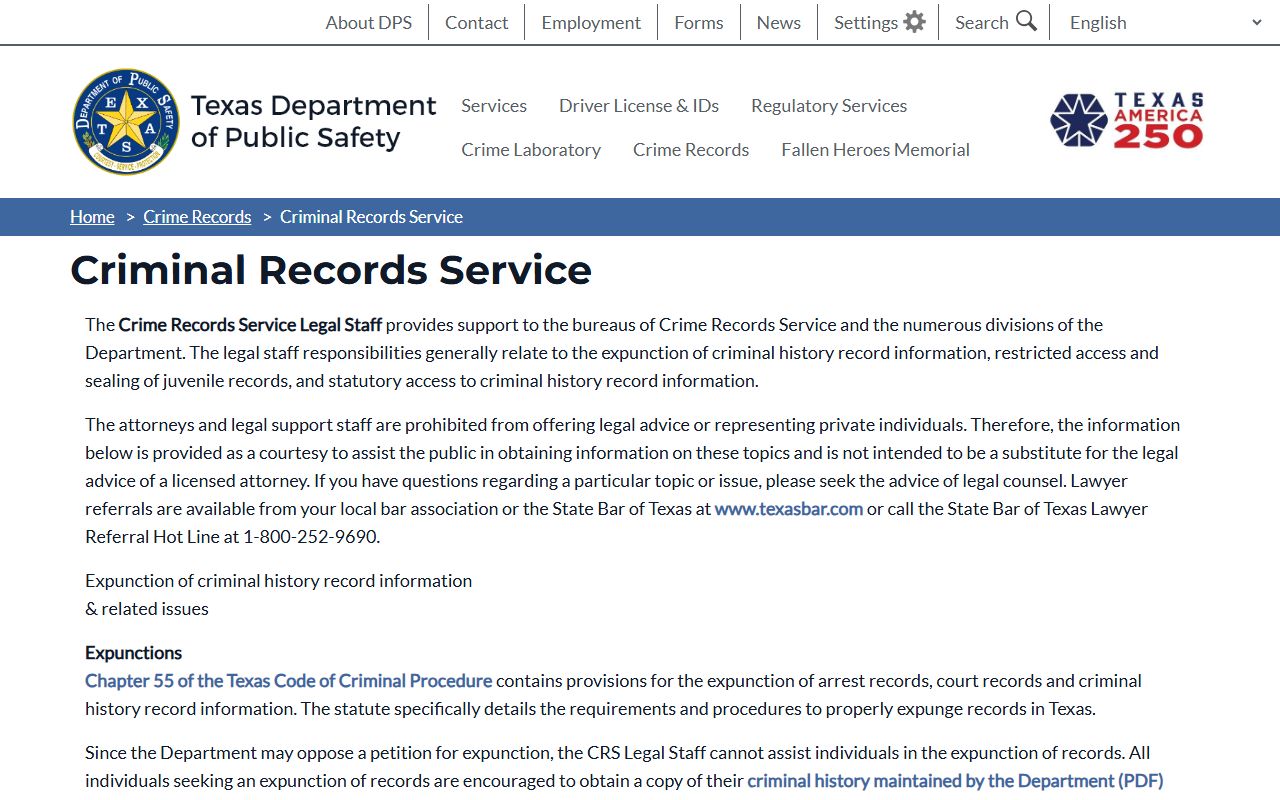
This service is the official state route for criminal history, separate from the county jail roster. The rules for it come from Texas Government Code Chapter 411, which governs how DPS keeps and shares criminal history record information.
Chapter 411 also explains a key warning about name-based searches.
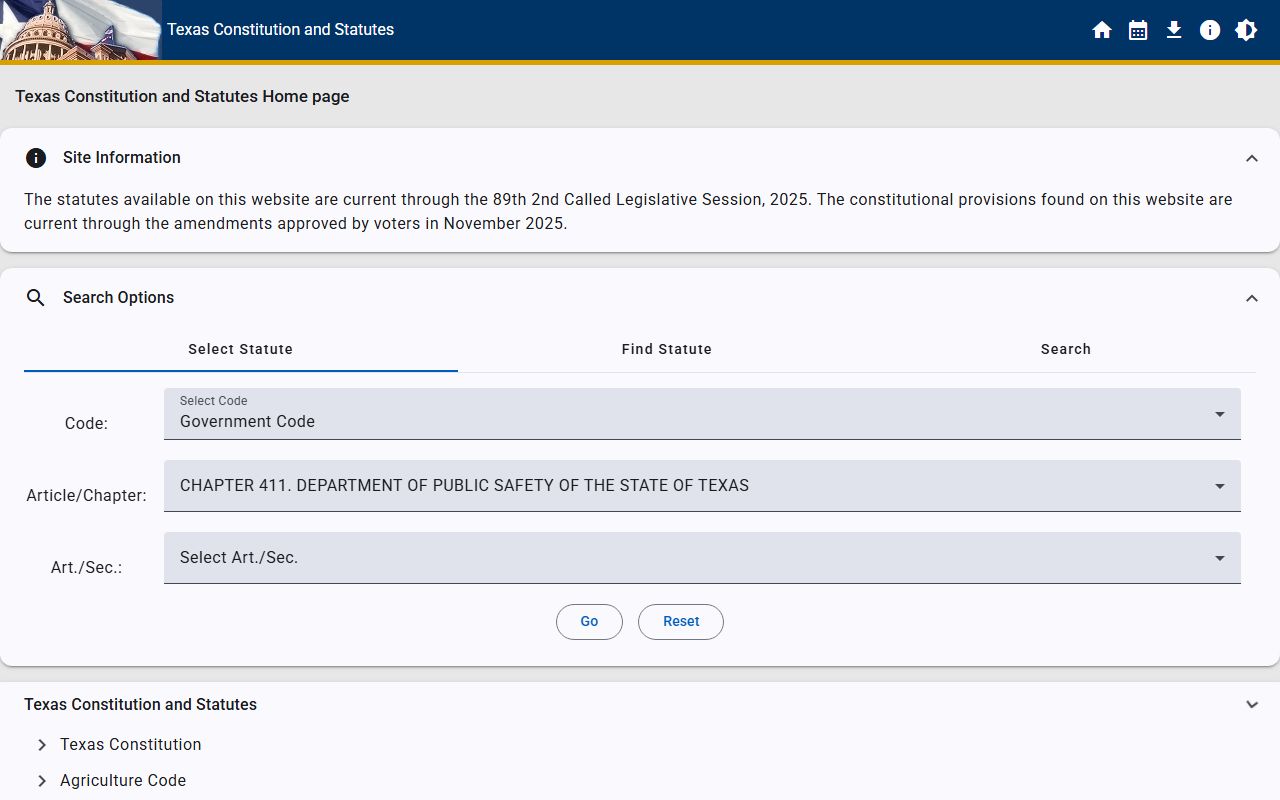
DPS states that name-based searches may be inaccurate and that fingerprint identification is the only positive link between a record and a person.
The Criminal District Attorney and Victim Services
Once a person is booked, the case file may go to the Criminal District Attorney for review. Phil Sorrells leads the Tarrant County Criminal District Attorney's office. The office decides whether to file charges, what charges to file, and how to handle the case. It works out of the Tim Curry Criminal Justice Center at 401 W. Belknap, Fort Worth. So the charge written at booking is not always the charge that ends up in court.
The Criminal District Attorney's office page describes the office mission and contacts.

The office charges criminal cases, but it also runs services for the people harmed by crime. The DA's Victim Services unit helps victims of violent crime and the families of those who died. It covers cases like assault, sexual assault, kidnapping, aggravated robbery, trafficking, family violence, and death cases.
DA Victim Services
Tim Curry Criminal Justice Center
401 W. Belknap St.
Fort Worth, TX 76196
817-884-2740
Mon-Fri 7:45 a.m.-4:45 p.m.
The unit's services include rights information, safety planning, Crime Victims' Compensation help, Victim Impact Statement support, and protective order paperwork. You can read the full list on the Victim Services page.

Victim Services also points people to the Texas IVSS system for release notifications, which updates status around the clock but is not an official record.
Defense and Appointed Counsel
An arrest can lead to charges, and a charged person has the right to a lawyer. People who cannot afford one may get court-appointed counsel. Tarrant County handles this through the Office of Attorney Appointments. It helps the criminal judges run the county's indigent defense plan and works on a court-appointed counsel model.
The Office of Attorney Appointments page explains how appointed defense works in the county.
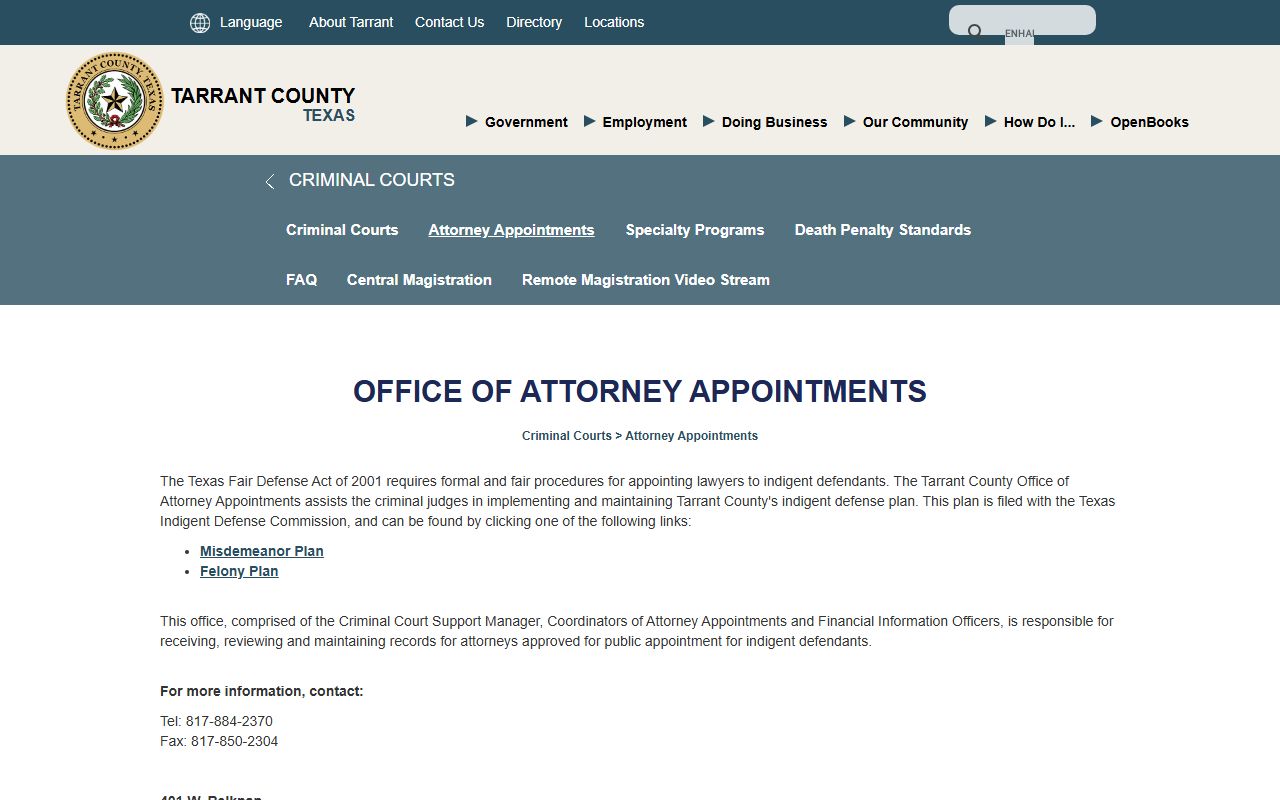
The office references TCCDLA, a nonprofit group of criminal defense attorneys in the county, for those who hire private counsel instead. Either way, this is the court side of an arrest, well past the booking that started the record.
Diversion and Expunction Eligibility
Not every arrest ends in a conviction that stays on a record. The Criminal District Attorney runs a Deferred Prosecution Program for some first-time offenders. The program takes the application within 90 days of the case being filed and charges a non-refundable $25 initial program fee. It asks for a questionnaire, two recommendation letters, a personal statement, school records, and a clean drug test through the county supervision department.
Finishing that program can lead to a dismissal and make a person eligible for expunction. Expunction is the legal step that clears the arrest record itself. It is covered in the sealed and expunged section below, and the path to it runs through the courts, not the jail.
Sealed vs. Expunged Records
Clearing an arrest record is not automatic in Texas. Two tools do the work, and they are not the same. Sealing, done through a nondisclosure order, hides a record from the public while police and certain agencies keep access. Expunction goes further. After an expunction, the records are destroyed, deleted, or returned, and the person can often deny the arrest. Expunction is the stronger remedy.
| Sealed | Expunged | |
|---|---|---|
| Visibility | Hidden from public view | Destroyed or treated as never existing |
| Law Enforcement | Authorized agencies keep access | Agencies must delete or return records |
| Governing Law | Government Code Chapter 411 nondisclosure | Code of Criminal Procedure Chapter 55A |
| Eligibility | Eligible deferred or qualifying offenses | Acquittal, pardon, certain dismissed or no-bill cases after waiting periods |
Expunction runs under Code of Criminal Procedure Chapter 55A. A person must fit a statutory category, file in district court in the county of arrest or prosecution, name every agency that holds records, and get a hearing unless it is waived. If a judge grants it, the final order goes to DPS and the named agencies so they comply. Common denial reasons include a conviction from the same criminal episode, a pending prosecution, or missed waiting periods. The District Clerk handles filing for district-court expunction in Tarrant County, so confirm current filing fees with that office. Nondisclosure under Chapter 411 only hides eligible records from public release while authorized agencies still see them.
Background Check Considerations
People often confuse a casual record lookup with a formal background check. They are not the same, and the gap matters. A formal employment or tenant screening falls under the federal Fair Credit Reporting Act, the FCRA. Those checks must follow strict rules on accuracy, notice, and consent. A simple name search of public arrest data does not meet that standard and should never be used for hiring, housing, credit, or insurance.
Accuracy is the other catch. DPS warns that name-based searches can be wrong, because two people can share a name and a birthdate. Fingerprint identification is the only sure link between a record and a person. So a name match is a lead, not proof. Always verify with the official source before you act on it.
Important: This site is not a consumer reporting agency under the FCRA, and its information cannot be used for employment, tenant, credit, or insurance decisions.
Restricted Criminal Records in Tarrant County
Not every arrest record is open. Texas law shields several kinds even when a county office holds them. Juvenile records are confidential under Texas Family Code Chapter 58, which controls who can see, share, or seal juvenile law-enforcement, probation, and court records. Public access to juvenile matters is far more limited than adult cases. Sealed and expunged records drop out of public view by court order. Active investigations can stay closed too.
A few statutes drive these limits. Texas Government Code § 552.108 can protect active law-enforcement and prosecution information when release would interfere with a case. That is why some arrest, warrant, and investigative files are held back while a matter is pending. Government Code § 552.101 keeps information confidential when another law makes it so, and it serves as the umbrella for medical, victim, and juvenile categories.
Criminal warrant data carries its own limit. The Sheriff does not release warrant information to the general public. Sources tied to the Sheriff state it goes to licensed bondsmen, attorneys, or law enforcement instead. For what is public about warrants and how to check your own status, see the Tarrant County warrant records page.